
(DISCLAIMER: I am not a doctor, and you should consult your healthcare professional before starting any health regimen.)
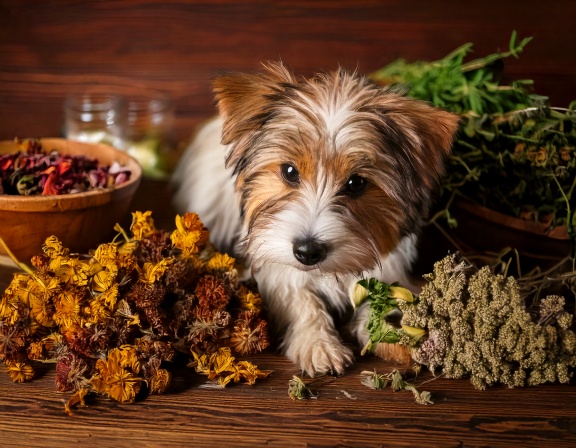
Key Takeaways
- A few herbs, such as chamomile, ginger, parsley, calendula, nettle, milk thistle, and turmeric, are commonly used for dogs when chosen with care.
- Gentle forms usually work best, such as cooled weak tea, tiny food toppers, or mild topical rinses.
- Some herbs sold for people are not safe for dogs, and many essential oils are a separate risk.
- Start with a tiny amount, then watch closely for any change in mood, stool, skin, or appetite.
- Ask a vet before giving herbs to puppies, pregnant dogs, senior dogs, or dogs on medicine.
Many pet owners reach for herbs because they want gentle support, not a crowded cabinet of products. For minor day-to-day issues, a few dog-safe herbs may help with tummy upset, stress, skin irritation, or less-than-fresh breath.
Still, herbs aren’t a cure-all. Dogs react to plants differently than people do, so the right herb, the right form, and a small amount matter more than good intentions.
That’s where a calm, safety-first approach helps. Below, you’ll find herbs that are often considered good for dogs, which ones to avoid, and one simple recipe you can try at home.
The best herbs for dogs and what each one may help with
When people ask what herbs are good for dogs, the shortest answer is this: a small group of well-known herbs may offer light support when used gently. Think of them like a soft blanket, not a full toolbox. They may comfort a minor issue, but they don’t replace care for illness, pain, or strong symptoms.
The safest picks tend to be simple and familiar. A weak herbal tea, cooled and served in a tiny amount, is often easier on dogs than a capsule packed with powder. In the same way, a little chopped herb in food can be milder than a concentrated extract.
For most dogs, less is better. A tiny amount can be enough to test tolerance.
Chamomile, ginger, and peppermint for digestion and calm
Chamomile is one of the most common herbs used for dogs. People often choose it for mild stress, restlessness, or a touch of tummy upset. A weak chamomile tea, cooled and diluted, is a gentle starting point. The main caution is sedation or stomach upset if you overdo it. Also, skip it if your dog has a known allergy to plants in the daisy family.
Ginger often comes up for nausea and motion sickness. If your dog gets queasy in the car, a very small amount of cooled ginger tea may be easier than powdered ginger from a capsule. Because ginger can be warming and active in the body, too much may irritate the stomach. Dogs on blood-thinning medicine need extra care here.
Peppermint sits in a trickier spot. In tiny amounts, the leaf may help some dogs with gas or mild stomach discomfort. Still, it can be too strong for others. A weak tea is gentler than the raw herb, and it’s far gentler than peppermint oil. If your dog has reflux, vomiting, or a sensitive stomach, peppermint may make things worse rather than better.
Parsley, calendula, and nettle for breath, skin, and gentle nutrition
Curly parsley is often used in small amounts for fresher breath. It has a clean, green smell, and a pinch mixed into food can help cover that classic dog-breath cloud. The caution is simple: use curly parsley, not large amounts of other parsley types, and don’t pile it on. Too much can upset the stomach.
Calendula is best known for skin support. For dogs, it usually makes the most sense as a mild topical wash for minor skin irritation or itchy spots, not as a daily supplement. A cooled calendula infusion can feel like a soft rinse after a muddy walk or during a rough skin week. Plant identity matters, though. Use true calendula, not look-alike flowers from the garden.
Nettle is a nutrient-rich herb that some people use for seasonal support. It contains minerals and has a long history in home herbal use. For dogs, nettle is usually given in modest amounts as a dried herb or weak tea, not as a fresh stinging leaf. Too much isn’t helpful, and fresh nettle can irritate skin before it’s prepared.
Milk thistle and turmeric for extra support, with a note on when to ask a vet
Milk thistle often enters the conversation when liver support comes up. The herb is widely discussed in pet wellness circles, especially for dogs who have taken medicines or need closer health support. Still, this is not a casual add-on for any dog at any time. Because supplement strength varies so much, milk thistle is best used with veterinary guidance.
Turmeric is usually chosen for inflammation support. Some owners use a small amount in food for older dogs or dogs with stiffness. Yet turmeric is not a kitchen fix for joint pain, injury, or illness. In some dogs it can irritate the stomach, and it may interact with medicine.
These two herbs have a stronger “talk to your vet first” label than parsley or chamomile. If your dog has a health condition, takes medicine, or seems unwell, pause the home remedy plan and ask for professional help.
How to choose, prepare, and serve herbs to dogs without overdoing it
A good herb can become a bad idea if the form is too strong. Dogs are small compared with us, and their bodies don’t process every plant the same way. That’s why the gentlest path often works best.
Start with one herb, not a blend of five. Keep the amount tiny. Then give your dog time to show you how that herb lands. If all seems well, you can decide whether it’s worth using again.
Start with the gentlest forms, like cooled teas and tiny food toppers
Cooled, weak tea is often the easiest place to begin. It spreads the herb through water, so the taste and strength stay mild. For example, a spoonful of weak chamomile tea added to food or offered on its own may be enough for a first try.
Tiny food toppers also work well. A pinch of finely chopped curly parsley over a meal is simple and low-fuss. On the other hand, strong tinctures, concentrated powders, and human capsules can hit too hard for a dog, especially a small one.
Keep the first serving small enough that you can watch the response. Picture it like testing bath water with one finger first. You don’t pour in more until you know the temperature is right.
Watch for side effects and stop if your dog seems worse
Even mild herbs can cause trouble in the wrong dog. Watch for clear warning signs after you offer something new. These include vomiting, diarrhea, itching, drooling, extra sleepiness, pacing, loss of appetite, or any odd behavior.
Natural doesn’t always mean safe. A leaf from the garden can still upset the stomach, and a “pet supplement” label doesn’t make a product gentle by default.
If symptoms are strong, sudden, or don’t improve, call your vet. Trust what you see in front of you. Your dog’s body language often tells the story before anything else does.
Herbs and plant products that are not safe for dogs
A balanced herb guide needs a strong safety section. Some plants that seem harmless in a human kitchen can upset a dog’s stomach, stress the nervous system, or clash with medicine. That’s why “natural” should never be your only filter.
It also helps to draw a hard line between whole herbs and essential oils. They are not the same thing. One is a leaf or flower in a mild form. The other is a packed, highly concentrated plant product.
Common herbs and seasonings to avoid or use only with veterinary advice
A few names deserve quick caution. Garlic and onion are well-known problem foods for dogs, even though people often use them as health foods. Nutmeg can affect the nervous system and should stay off the menu. Pennyroyal is also unsafe. Large amounts of tea tree products can be risky, especially on the skin.
Some supplements create risk because the label is vague. Others contain herb blends with little dog safety data. If a product hides the exact herb, dose, or strength, skip it.
This is also where home guessing can go wrong. If your dog has seizures, liver disease, kidney trouble, stomach ulcers, or takes daily medicine, many herbs move out of the “try a little” category and into the “ask first” category.
Why essential oils are a separate safety issue for pets
Essential oils are much stronger than herbs. A single bottle can hold a large amount of plant material in a tiny space, and that strength changes the safety picture fast.
Dogs may run into trouble through skin contact, inhalation, or licking oil off fur or paws. What smells pleasant to you can be too much for a dog’s nose, lungs, or skin. Cats are even more sensitive, but dogs also need care.
So if you’re asking what herbs are good for dogs, don’t assume the matching essential oil is also fine. Chamomile tea and chamomile oil are not the same thing. Peppermint leaf and peppermint oil are not the same thing either.
A simple dog-friendly herbal recipe readers can try at home
A homemade treat can be a gentle way to try an herb, as long as the recipe stays mild. This one keeps things simple, cool, and easy to portion. It also avoids the trap of turning herbs into a daily fix.
Recipe: chamomile and parsley frozen bites
Use this as an occasional treat, not a cure.
Ingredients
- 1/2 cup weak chamomile tea, brewed and fully cooled
- 1 teaspoon finely chopped curly parsley
- 2 tablespoons plain unsweetened yogurt, or use water for a lighter option
Steps
- Brew a weak cup of chamomile tea, then let it cool fully.
- Stir the parsley into the tea.
- Add the yogurt or water and mix well.
- Pour into a silicone mold or ice cube tray.
- Freeze until firm.
For small dogs, start with half of a small cube. Medium dogs can try one small cube. Large dogs can have one to two small cubes. The first time, offer less than you think you need and watch for any stomach upset.
Store the bites in the freezer for up to two weeks. If your dog has dairy trouble, use water instead of yogurt. Also, skip this treat if your dog has never tried chamomile or parsley before and you’re not able to observe them after.
Dogs don’t need a lot to enjoy the cooling texture. Sometimes one small bite is plenty.
A calm, safe way to use herbs for dogs
The safest answer to what herbs are good for dogs is also the simplest one. Stick with a few familiar herbs, use gentle forms, and start small. Chamomile, ginger, parsley, calendula, nettle, milk thistle, and turmeric can all have a place, but only when they fit the dog in front of you.
If you’re ever torn between trying an herb and calling the vet, choose the safer path. A thoughtful, safety-first approach makes herbs a helpful part of natural pet care, not a risky guess.
Watch your dog closely, trust what you see, and let caution lead the way.
Stay Connected for More Natural Living Inspiration
Stay Connected for More Natural Living Inspiration
If you enjoyed this post about herbal wellness and love discovering natural ways to refresh your home and wellness, don’t miss out on future recipes and clean-living tips! Subscribe to the blog for weekly DIYs, wellness inspiration, and herbal remedies delivered straight to your inbox.
Don’t forget to visit my LinkTree for the links to my favorite essential oils, herbal teas, natural recipes, YouTube ambiance videos for sleeping; a project I created to help with insomnia symptoms and the second channel, Rooted in Nature YouTube Channel both channels feature herbal recipes for wellness and home. And if you’re interested in essential oils along with herbal teas, feel free to visit my other website DI Writes and Blogs.
Thanks for coming by!
